SpaceX's Starfall Return Capsule Completes Maiden Flight, Carrying Up to 1,000 kg of Space Lab Payloads
SpaceX has quietly pulled back the curtain on an entirely new class of spacecraft. The company’s Starfall return capsule — a flat, disc-shaped cargo vehicle designed to ferry payloads to orbit and back — completed its maiden flight on June 23, launching from Cape Canaveral’s Space Launch Complex 40 at 6:52 AM Eastern Time aboard a Falcon 9 rocket.
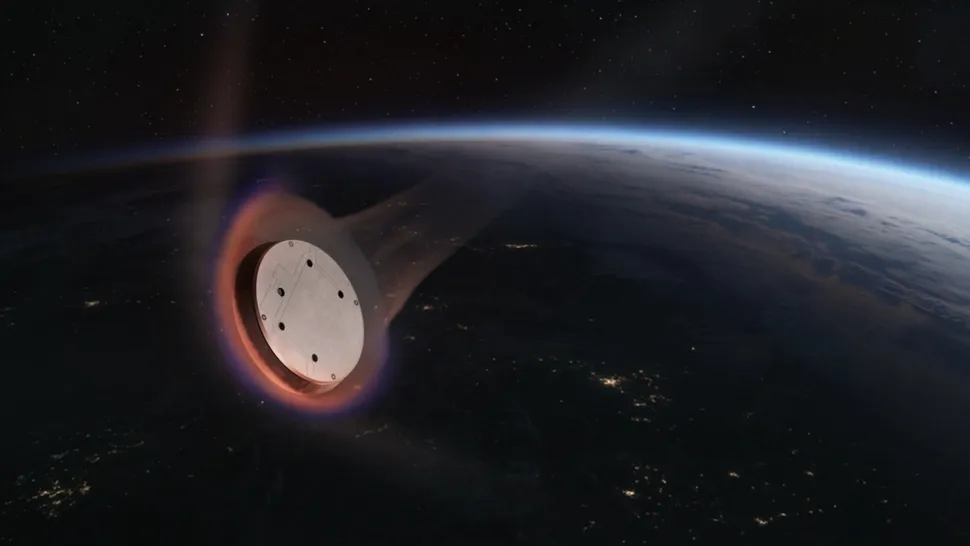
The Starfall capsule is purpose-built for cargo only, with no crew capability. Its core mission: providing a low-cost, routine microgravity round-trip for scientific experiments, space-based pharmaceutical production, and in-orbit manufacturing. SpaceX described the vehicle on X (formerly Twitter) as offering “a low-cost, routine microgravity round-trip channel for scientific research and space manufacturing.”
The demonstration flight caught many in the space community off guard, as SpaceX had disclosed virtually no information about the Starfall program beforehand. The launch itself maintained a tight veil of secrecy — the company cut its livestream roughly 10 minutes after liftoff, a protocol typically reserved for national security missions.
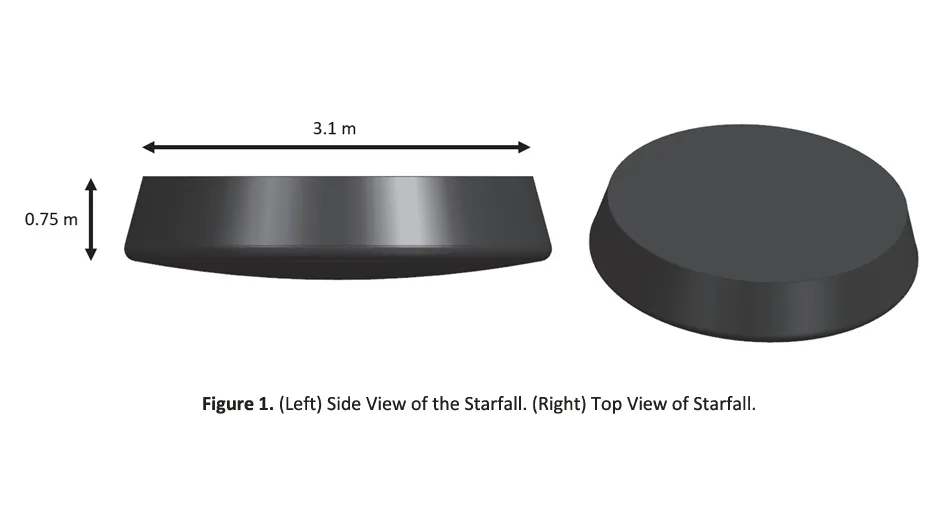
In terms of scale, Starfall dwarfs existing offerings. The current leader in orbital return capsules, Varda Space, operates a fleet of conical W-series vehicles measuring 0.9 meters in diameter and weighing roughly 300 kg. Varda has successfully recovered five such capsules to date, including one that carried a U.S. Air Force payload for over eight weeks in orbit. Starfall, by contrast, spans 3.1 meters in diameter, stands 0.75 meters tall, and can accommodate up to 1,000 kg of payload — roughly 30 times Varda’s capacity.
According to filings SpaceX submitted to the Federal Aviation Administration, the Starfall capsule is divided into two primary sections that separate after re-entry. The upper section houses the payload bay and attitude-control components, while the carbon-fiber heat shield on the lower section contains compressed gas storage that powers precision maneuvers during re-entry, landing, heat shield jettison, and parachute deployment.
The capsule carries no liquid propellants or hazardous materials. SpaceX’s FAA documentation specifies that Starfall relies exclusively on inert cold-gas nitrogen for attitude control and that all pressurized lines are vented prior to ocean splashdown, ensuring no propellant release into the marine environment.
Beyond long-duration low-Earth orbit missions, SpaceX plans to fly Starfall on suborbital trajectories as well. The capsule lacks its own propulsion system and cannot de-orbit autonomously; for this test flight, the Falcon 9’s second stage likely handled the return maneuver, though the FAA filing did not detail the exact de-orbit method. The splashdown target zone for the returning capsule lies in the Pacific Ocean, roughly 1,300 kilometers west of the U.S. West Coast. SpaceX has not yet disclosed how long the Starfall capsule will remain in orbit before re-entry.
The first-stage booster supporting this mission — booster B1078 — landed safely on the Atlantic droneship “A Shortfall of Gravitas” approximately nine minutes after launch. This marked the booster’s 29th flight, a veteran that previously launched NASA’s Crew-6 mission to the International Space Station, a U.S. Space Force payload, and 23 Starlink deployments.
If the Starfall program matures as planned, it could mark a pivotal shift for SpaceX — from a launch provider into a full-spectrum space logistics operator, opening the door to a new era of industrial-scale manufacturing in orbit.