NASA's Perseverance Rover Completes a Full Mars Marathon in Just 5 Years
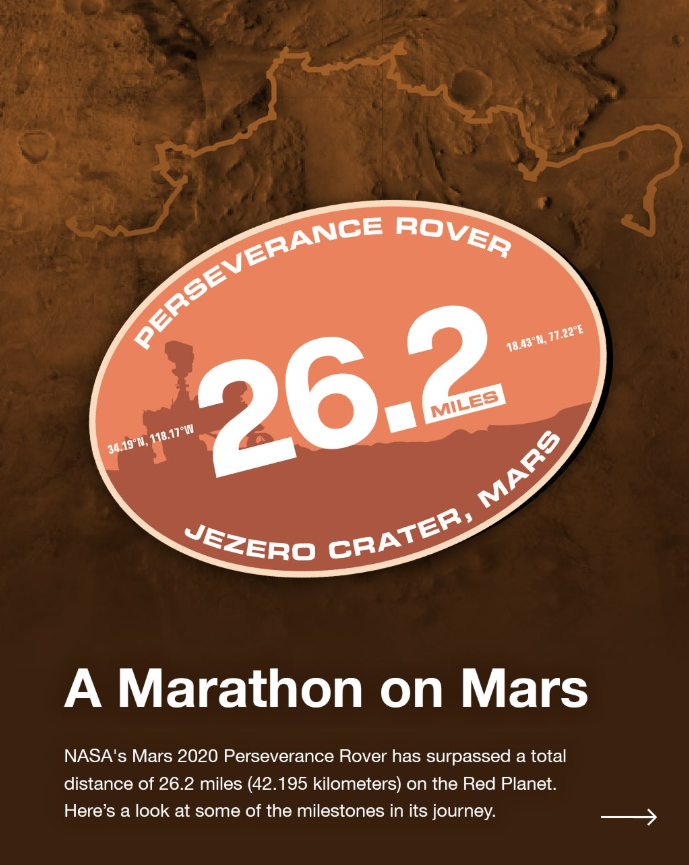
There’s a quiet tension in every rover mission to Mars: the Red Planet is vast, the terrain is punishing, and even at top speed these robotic explorers crawl along at barely a tenth of a mile per hour. So when NASA announced this week that Perseverance had officially logged 26.2 miles — a full marathon distance — on the surface of Mars, the number carried more weight than a simple odometer reading ever could.
Perseverance, which touched down in Jezero Crater in February 2021, reached the marathon milestone on June 14 during an expedition across the crater’s western rim — a region rich with ancient geology that scientists believe once held a sprawling lake. NASA confirmed the achievement in an Instagram post, noting that Perseverance is only the second interplanetary vehicle in history to travel a marathon’s distance on another world. The first was Opportunity, the agency’s remarkably durable rover that covered the same ground back in 2015 — though it needed more than eleven years to do so.

The contrast between the two missions underscores how far autonomous driving technology has come. Opportunity, which landed in 2004, spent over a decade creeping across Meridiani Planum, while Perseverance’s onboard AutoNav system has allowed it to chart a far more efficient path across terrain riddled with boulders, sand traps, and sharp inclines. For additional context, Curiosity — which landed in 2012 and still operates in Gale Crater — has managed roughly 23 miles in its fourteen years on the surface, a figure that highlights just how much ground Perseverance is covering relative to its mission age.
IT-NEWS has learned that the marathon was achieved while the rover was investigating a stretch of the crater that has proven remarkably fertile for discovery. NASA describes Perseverance as a “robot geologist,” and it has earned the title: the rover has already identified sedimentary deposits consistent with an ancient lakebed, along with chemical signatures that some researchers believe could be evidence of past microbial activity. The marathon itself is a secondary headline — the real story is that every meter of those 42.2 kilometers was driven through terrain that is actively rewriting what we know about Mars’s habitable past.
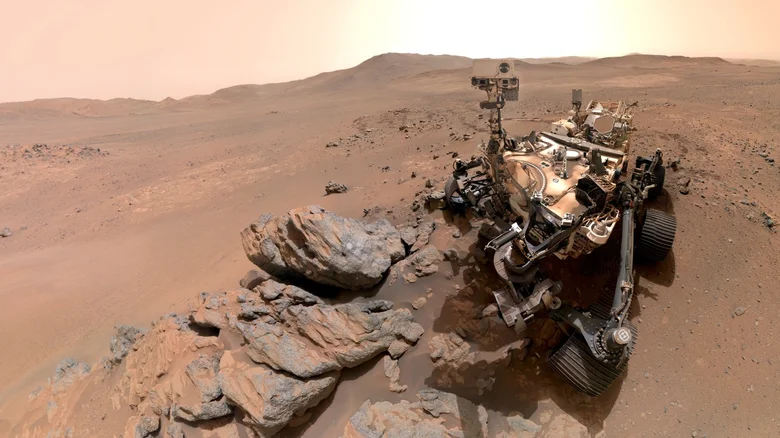
In recent days, Perseverance has beamed back a fresh batch of imagery from its westward traverse, including a selfie — the kind of photograph that serves as both a mission milestone marker and a quiet reminder that, even as AI and autonomy push the boundaries of exploration, there’s still something deeply human about a machine pausing to take its own picture on an alien world.