IAEA Launches Interactive Platform Mapping the World's 448,000 Tonnes of Spent Nuclear Fuel
The International Atomic Energy Agency (IAEA) has unveiled its first interactive map tool designed for public access, offering a comprehensive window into the global inventory of spent nuclear fuel — the uranium and plutonium-bearing material discharged from reactors after being “burned” in the fission process. The platform arrives as nations around the world reassess nuclear energy’s role in low-carbon power strategies, placing the long-term management and ultimate disposal of spent fuel under a brighter spotlight than ever before.
Built upon data submitted by member states during the 2025 reporting cycle under the Joint Convention on the Safety of Spent Fuel Management and on the Safety of Radioactive Waste Management — and supplemented with other publicly available information — this marks the second edition of the IAEA’s Global Spent Fuel Inventory. The first edition, published in 2019, was limited to static infographics; this new release transforms the dataset into a dynamic, interactive map that lets policymakers, researchers, and the general public explore the data with unprecedented ease.
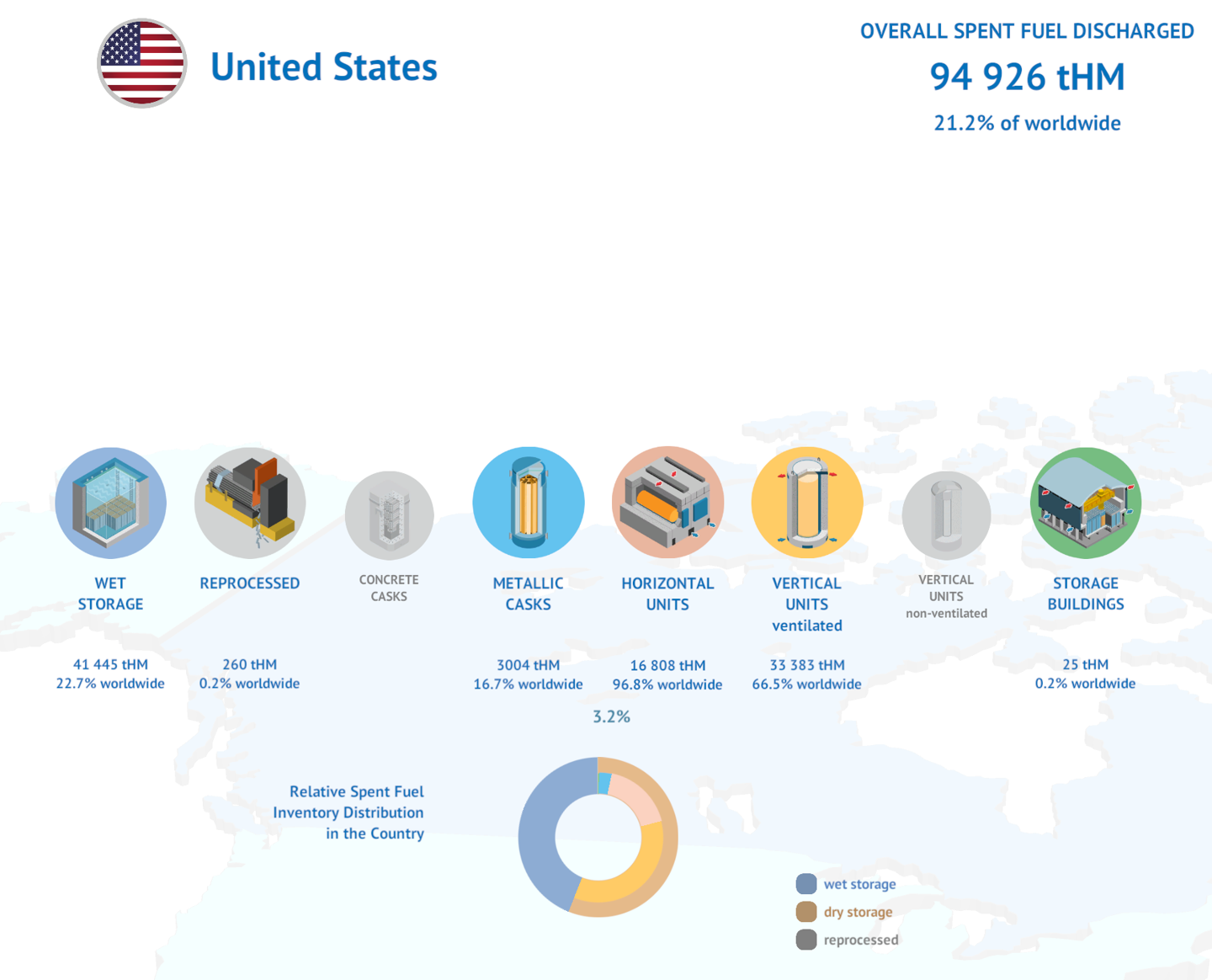
According to the IAEA’s data, nuclear power plants worldwide have cumulatively generated approximately 448,000 tonnes of heavy metal (tHM) in spent fuel — heavy metal being the standard unit for measuring uranium and other heavy element content in nuclear fuel. Of this total, roughly 322,000 tHM, or about three-quarters, currently sits in storage, while approximately 126,000 tHM — about one-quarter — has undergone reprocessing. Reprocessing extracts usable materials from spent fuel and fabricates them into fresh fuel, reducing both the demand for newly mined uranium and the volume of high-level radioactive waste requiring permanent disposal.
When it comes to storage methods, the global picture is split. Around 41% of spent fuel is held in wet storage facilities — primarily cooling pools adjacent to reactors where freshly discharged fuel cools down, along with centralized pool-type storage sites. Another 31% resides in dry storage systems, which encompass concrete casks, metal containers, dedicated storage buildings, and modular vault configurations.
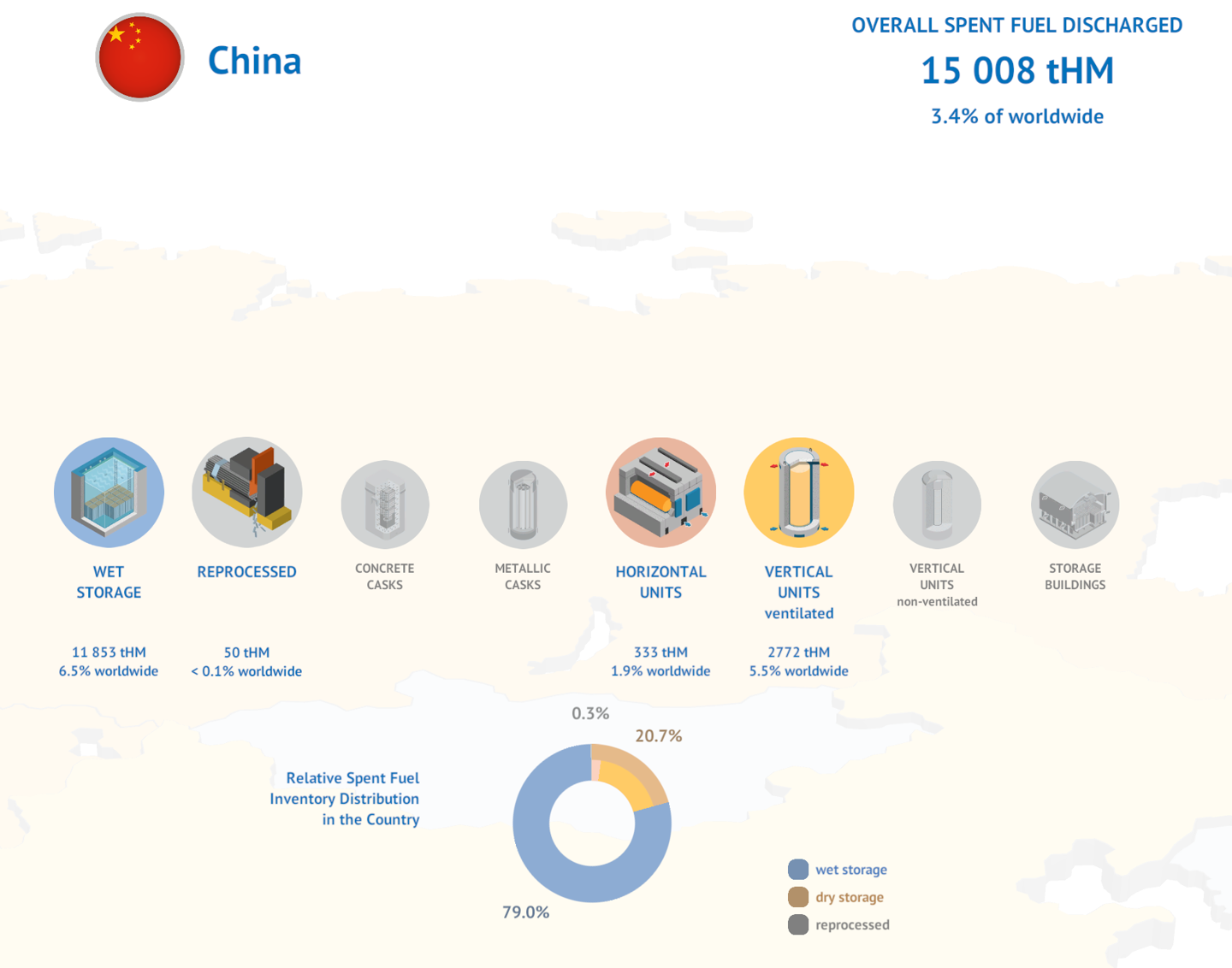
The IAEA notes that over the past several decades, many countries have progressively transferred older spent fuel from wet pools into dry storage. Among dry storage technologies, vertical ventilated storage units account for the largest share, holding roughly 50,168 tHM — about 11% of all discharged spent fuel globally.
Nations continue to pursue diverging paths for the long-term management of their spent fuel inventories. Finland is on the verge of commissioning the world’s first deep geological repository for spent nuclear fuel, a facility designed to isolate radioactive material in rock formations deep underground on a timescale stretching far beyond any human planning horizon.
“The tool provides structured information on global spent fuel inventories, including the amounts that have been reprocessed and the breakdown across different storage systems,” said Amparo Gonzalez Espartero, Technical Lead at the IAEA’s Division of Nuclear Fuel Cycle and Waste Technology. “This supports technical analysis and helps facilitate more informed discussion among countries and stakeholders on long-term spent fuel management strategies.”
As multiple nations double down on nuclear expansion or revisit the role of atomic energy in their decarbonization roadmaps, the challenge of safely managing and ultimately disposing of spent fuel looms large. The IAEA’s new interactive platform delivers a standardized, transparent data foundation — one that makes it significantly harder to ignore the steadily growing mountain of material that the world’s reactors have already produced.