FAW Jiefang's Sodium-Ion Electric Truck Retains 90% Charge at –40°C in Seven-Month Trial
There is a quiet tension at the heart of the electric trucking industry: lithium-ion batteries work well enough in mild climates, but send them into a northern winter and their range collapses. For fleet operators in the world’s colder regions, the promise of electrification has always come with an asterisk. A recent test by one of China’s largest truck manufacturers suggests that asterisk may finally be on its way out.
IT-NEWS, June 22 — FAW Jiefang, the heavy-truck arm of China’s FAW Group, announced via its official WeChat account on June 18 that it had completed a comprehensive, real-world test of a sodium-ion battery electric tractor unit, developed in partnership with sodium-ion specialist Zhongke Haina. The milestone marks what the companies describe as a decisive advance for sodium-ion technology in the heavy commercial vehicle segment — a sector where lithium’s well-documented struggles with cold-weather performance and slow charging have kept many operators on diesel.
The test vehicle, a Jiefang J6P new-energy electric tractor, was fitted with a 339 kWh sodium-ion battery pack and subjected to nearly seven months of continuous evaluation. The battery was pushed through bench tests, full-vehicle reliability trials, dynamic performance assessments, and extreme-environment runs covering both high heat and severe cold. By the end of the campaign, the truck had accumulated more than 15,000 kilometers of road testing, all conducted under conditions designed to mirror typical fleet operations rather than laboratory ideals.

The headline number from the cold-weather phase is striking: at –40°C, the sodium-ion pack retained more than 90% of its usable capacity. That figure directly addresses the single biggest complaint about lithium-ion trucks in high-latitude markets — the precipitous drop in range that comes with winter, when battery chemistry slows and cabin heating draws heavily on the pack. FAW Jiefang explicitly positions this result as a solution for the northeastern and northwestern regions of China, where sub-zero temperatures are a fact of operational life for months at a time.
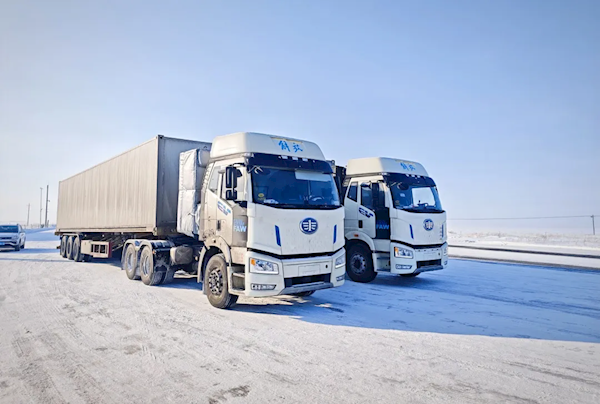
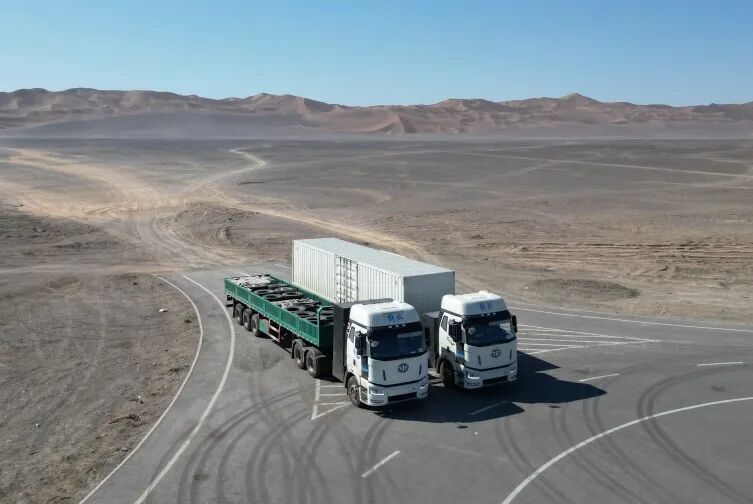
The sodium-ion pack also delivers a compelling fast-charging profile alongside its cold-weather resilience. A full charge takes just 20 to 25 minutes, and even under rapid-charging conditions the cells demonstrated a cycle life exceeding 8,000 charge-discharge cycles. That kind of longevity, combined with the quick turnaround time, reshapes the economics for high-utilization fleets that need to keep vehicles moving with minimal downtime.
On the safety front, sodium-ion chemistry brings inherent advantages. The materials are less chemically aggressive than lithium-based alternatives and exhibit superior thermal stability — an important consideration for commercial vehicles that operate under heavy loads, around the clock, and with safety standards that leave little room for compromise. FAW Jiefang and Zhongke Haina framed these properties as an ideal match for the punishing demands of heavy trucking, where a battery fire is not merely an inconvenience but a potentially catastrophic event.
While sodium-ion batteries have long been touted as a lower-cost, more abundant alternative to lithium, their energy density has historically lagged enough to keep them confined to stationary storage and smaller vehicles. This extended trial in a full-size tractor unit — with real range, real cold, and real charging demands — amounts to one of the strongest signals yet that the technology is crossing from laboratory promise into commercial freight. For an industry still searching for a battery that can handle a Siberian winter without apology, that is a signal worth paying attention to.